
Ever wonder what “much love” really means? It’s a simple way to show care. This guide breaks it all down.
We’ve gathered over 200 ways to say it. Some are sweet, some are casual. You’ll find the perfect fit here.
Language keeps changing every single year. In 2026, new phrases are trending fast. Let’s explore the best ones together.
“Much Love” Meaning & Usage
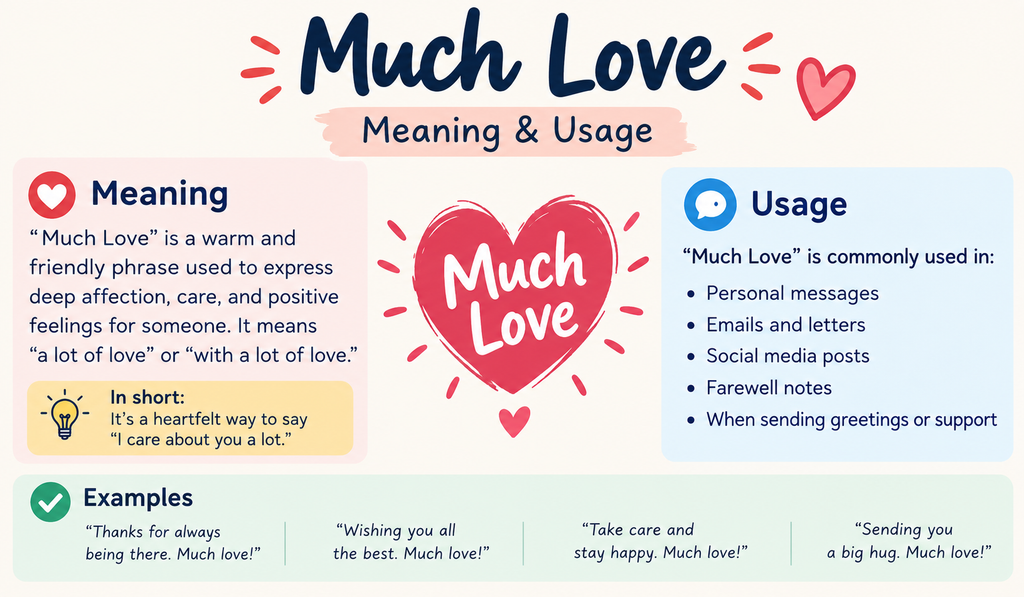
- “Much love” is a warm, caring phrase. It shows affection without being too serious.
- People use it to express genuine warmth. It feels friendly, not overly formal.
- It works in texts, cards, and casual talk. The tone stays light and sincere.
- This phrase bridges friendship and deeper feeling. It’s flexible for many relationships.
- You can say it to family or friends. It always feels kind and heartfelt.
- It’s short, but it carries real meaning. Simplicity is part of its charm.
- Many people use it as a sign-off. It ends messages on a warm note.
- It suggests care without demanding commitment. That balance makes it widely used.
- “Much love” fits both text and speech. It sounds natural in either setting.
- It’s become a modern staple of affection. People reach for it often.
- The phrase feels timeless yet casual today. It never feels out of place.
- Using it regularly can strengthen your bonds. Small words build real connection.
What Does “Much Love” Really Mean in Emotional Context?
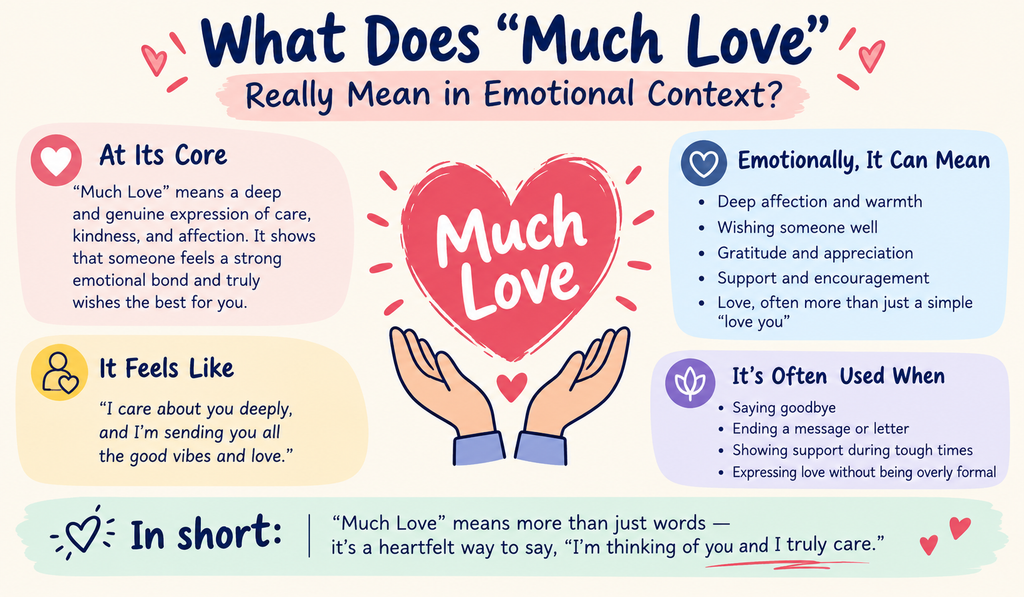
- Emotionally, it signals genuine warmth and care. It’s more than just a habit.
- It often reflects real affection for someone. The feeling behind it matters most.
- People say it when words feel too big. It softens deep emotion gently.
- It can mean “I care about you deeply.” Yet it stays comfortably casual.
- The phrase carries comfort and reassurance. It tells someone they matter.
- Context shapes its emotional weight completely. A close friend feels it deeply.
- It’s often used to comfort someone struggling. The warmth offers quiet support.
- Saying it can ease tension after conflict. It signals love still remains.
- It reflects tenderness without heavy pressure. That’s why people trust it.
- Emotionally, it’s a gentle bridge to deeper love. It opens the door softly.
- It can express gratitude wrapped in affection. Two feelings blend into one.
- The phrase often means more than it says. Its simplicity holds real depth.
The Difference Between “Love You,” “Lots of Love,” and “Much Love”
- “Love you” feels direct and personal. It’s often reserved for close bonds.
- “Lots of love” feels warm and generous. It works well for wider circles.
- “Much love” sits in between the two. It’s affectionate but still casual.
- “Love you” usually implies deep commitment. It’s not thrown around lightly.
- “Lots of love” suits group messages easily. It spreads warmth to many people.
- “Much love” feels modern and relaxed. It fits texts and social media well.
- Each phrase carries a different emotional weight. Choose based on the relationship.
- “Love you” can feel romantic or familial. Context always shapes its meaning.
- “Lots of love” often appears in cards. It’s a classic, comforting choice.
- “Much love” feels trendy among younger generations. It’s become a popular sign-off.
- All three phrases share a caring root. Their tone simply shifts slightly.
- Picking the right one shows emotional awareness. Words matter more than we think.
- Understanding the difference helps you communicate better. Precision in feeling builds trust.
The Deeper Feelings Hidden Behind Saying “Much Love”

- Behind the phrase often lies real vulnerability. Saying it takes quiet courage.
- It can hide unspoken gratitude for someone. Words sometimes carry more than shown.
- People use it when they feel emotional but shy. It softens a bigger feeling.
- It often means “I’m thinking of you.” That thought carries genuine warmth.
- The phrase can mask deeper longing sometimes. Feelings hide behind casual words.
- It reflects care that words can’t fully capture. Simplicity holds complex emotion.
- Saying it after hard news shows quiet support. It reassures without overwhelming.
- It can be a gentle way to show loyalty. Love doesn’t always need grand words.
- Sometimes it hides a wish to stay connected. Distance makes the phrase meaningful.
- It reflects trust between two people quietly. Not everyone earns this phrase.
- The deeper feeling is usually genuine tenderness. Even brief, it says a lot.
- It’s often a small window into big emotions. Notice it when someone says it.
Is “Much Love” Romantic or Just Affectionate?
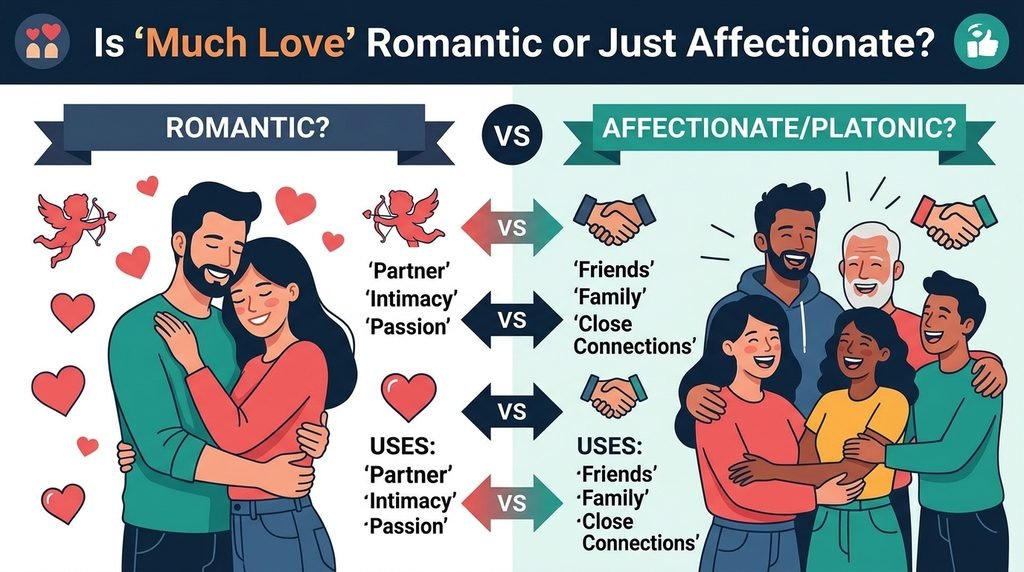
- It can be either, depending on context. Tone and relationship decide its meaning.
- Between friends, it usually stays purely affectionate. No romance is implied there.
- Between partners, it can feel deeply romantic. The same words shift meaning easily.
- Family members often use it warmly, not romantically. It expresses simple care.
- In flirty texts, it can hint at romance. Timing changes its emotional weight.
- It’s rarely confusing within established relationships. People usually sense the intent.
- New relationships might read more into it. Context clarifies quickly, though.
- It’s safe for casual affection among acquaintances. No romantic pressure attached there.
- Romantic partners often personalize it further. Adding names deepens the feeling.
- The phrase stays flexible across many relationships. That’s part of its appeal.
- Reading tone and history helps clarify intent. Words alone don’t tell everything.
- Ultimately, it adapts to who says it. Meaning follows the relationship closely.
Warm and Cozy Sign-Offs for Close Friends and Family
- “Sending you warm hugs always.” Simple, cozy, and full of care.
- “Thinking of you with love.” A gentle reminder that you matter.
- “Wrapped in love, always.” Cozy words for close family members.
- “Love you to the moon.” A sweet, familiar closing line.
- “Warm thoughts your way today.” Perfect for a caring text message.
- “Hugs and love, always here.” Comforting words for close friends.
- “You’re loved more than you know.” A reassuring, heartfelt sign-off.
- “Sending cozy vibes and love.” Casual, warm, and easy to use.
- “Forever grateful for you, love.” A thankful, affectionate closing line.
- “Love always, no matter what.” Simple reassurance for family members.
- “Take care, you’re deeply loved.” A gentle, comforting way to end.
- “Sending sunshine and love today.” Bright, cozy words for anyone.
When to Use “Much Love” in Messages and Conversations
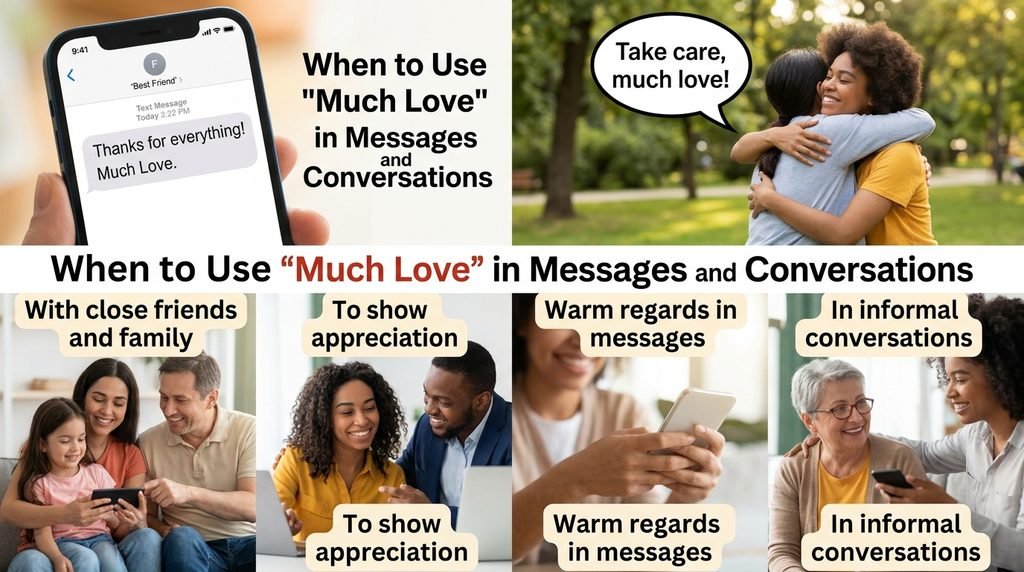
- Use it when ending a heartfelt text message. It softens the goodbye nicely.
- It works well after sharing good news together. It adds warmth to celebration.
- Say it when comforting someone going through hardship. It offers gentle reassurance.
- Use it in birthday or holiday messages easily. It fits festive tones well.
- It’s great for casual check-ins with friends. Simple warmth, no pressure attached.
- Add it when saying goodbye after a visit. It leaves a caring impression.
- Use it in group chats to spread warmth. Everyone feels included and cared for.
- It fits well in thank-you messages too. Gratitude and affection blend nicely.
- Say it when someone needs encouragement today. It shows you’re rooting for them.
- Use it casually in everyday conversation, too. It doesn’t need a special occasion.
- It works in social media captions and comments. Short, sweet, and genuine.
- Use it whenever words alone feel incomplete. It fills the emotional gap gently.
Sweet Psychological Effects of Hearing “Much”

- Hearing warm words can lower stress instantly. The brain responds to kindness quickly.
- It triggers feelings of safety and comfort. People relax when they feel cared for.
- Warm phrases boost mood almost immediately. A little kindness goes a long way.
- It can strengthen feelings of belonging deeply. Connection matters for mental wellbeing.
- Hearing affection releases feel-good hormones naturally. The body responds to emotional warmth.
- It can reduce loneliness in difficult moments. Words remind people they’re not alone.
- Warm sign-offs improve overall relationship satisfaction. Small gestures build lasting trust.
- It encourages reciprocated kindness in return. Warmth tends to spread naturally.
- Hearing it regularly builds emotional security. Consistency matters more than grand gestures.
- It can ease anxiety during stressful conversations. Comfort softens tension effectively.
- Positive words improve memory of the moment. People remember how you made them feel.
- Overall, warmth improves both giver and receiver. Kindness benefits everyone involved equally.
Romantic Alternatives to Say Instead of “Much Love”
- “All my heart, always.” A deeply romantic and simple line.
- “Yours completely, forever.” Perfect for a devoted partner.
- “You have my whole heart.” Romantic, warm, and sincere.
- “Loving you more each day.” A sweet, growing sentiment.
- “Forever yours, without question.” Strong, romantic, and reassuring.
- “My heart beats for you.” A classic romantic expression.
- “Endless love, just for you.” Deep and heartfelt wording.
- “You’re my favorite person, always.” Romantic yet playful tone.
- “Falling for you, again today.” Sweet and continuously romantic.
- “Every day, I choose you.” Romantic commitment in few words.
- “You are my heart’s home.” Poetic and deeply romantic.
- “Love you beyond words today.” Simple, sincere, romantic closing.
Heart-Melting Text Examples Using “Much”
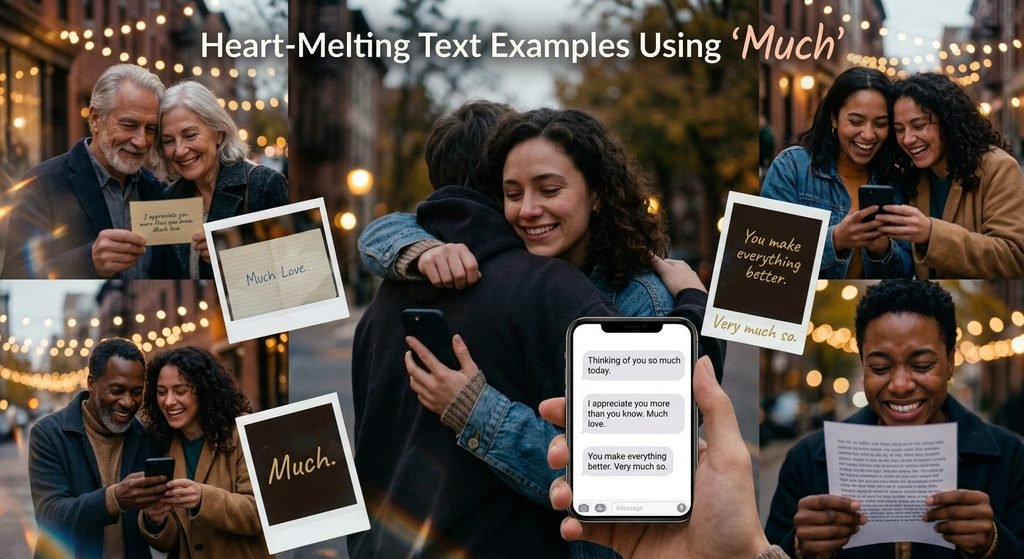
- “Much love, thinking of you constantly.” Simple, warm, and sincere.
- “Sending much love your way today.” Perfect for a comforting text.
- “Much love always, wherever you are.” A reassuring, heartfelt message.
- “Much love for everything you do.” Grateful and affectionate wording.
- “Much love, you made my day.” Sweet appreciation in one line.
- “Much love, can’t wait to see you.” Warm anticipation expressed simply.
- “Much love, proud of you today.” Encouraging and heartfelt support.
- “Much love, hope you’re doing okay.” Gentle check-in with care.
- “Much love, you deserve the best.” Kind, uplifting text message.
- “Much love, missing you so much.” Honest, tender expression shared.
- “Much love, thank you for everything.” Grateful, warm closing line.
- “Much love, you’re always in my thoughts.” Comforting and consistent affection.
Romantic and Intimate: Elevating Your Message to a Partner

- Add their name for a personal touch. “Much love, [Name], always yours.”
- Mention a shared memory for depth. It makes the message feel intimate.
- Pair it with a specific compliment. “Much love, you looked amazing today.”
- Use it before goodnight for warmth. “Much love, sleep well, my dear.”
- Combine it with future plans together. It builds anticipation and closeness.
- Add a playful nickname for intimacy. It personalizes the romantic message further.
- Say it after a meaningful conversation ends. It seals the emotional moment.
- Use it to reassure during distance apart. “Much love, missing you deeply.”
- Pair it with gratitude for support shown. It deepens the romantic connection.
- Add “always and forever” for commitment. It elevates the phrase’s intimacy.
- Use it right after saying “I love you.” It reinforces the deeper sentiment.
- Keep it simple but sincere in tone. Authenticity matters most in romance.
Is “Much Love” the Same As “I Love You”?
- Not exactly, though both express real care. “I love you” feels more direct.
- “Much love” is softer and more casual. It doesn’t carry the same weight.
- “I love you” often marks a milestone. “Much love” fits everyday moments better.
- Both phrases share warmth at their core. Intensity is what separates them.
- “Much love” can be said more freely. “I love you” feels more deliberate.
- Context decides how close they really are. Relationship stage matters a lot.
- “I love you” usually implies deeper commitment. “Much love” stays more flexible.
- Some couples use both interchangeably over time. Comfort level shapes word choice.
- “Much love” can be a stepping stone. It sometimes leads to bigger words later.
- Neither phrase replaces genuine actions of care. Words matter, but actions confirm them.
- Understanding the difference avoids mixed signals. Clarity strengthens communication overall.
- Ultimately, both aim to express real affection. The size of the words simply differs.
Cultural Meanings of “Much Love” Around the World

- In the U.S., it’s a casual, friendly phrase. It’s used often in texts and speech.
- In the U.K., it can feel warmly informal. Friends use it as a gentle goodbye.
- In parts of Africa, it reflects community warmth. It’s often shared among friends and family.
- In the Caribbean, it’s a common warm greeting. It reflects deep cultural friendliness.
- In hip-hop culture, it began as solidarity. It later spread into everyday language.
- In digital culture worldwide, it’s now common online. Social media spread it globally fast.
- In some cultures, it’s reserved for closer bonds. Others use it more freely daily.
- Its meaning can shift slightly by region. Local tone always shapes its warmth.
- In many places, it’s now genuinely universal. People understand its caring intent everywhere.
- Younger generations use it more casually worldwide. It transcends many cultural boundaries.
- Despite regional differences, warmth remains constant. Core affection stays the same globally.
- Overall, it’s become a global expression of care. Its roots vary, but the feeling doesn’t.
Also Read This Wishes 500+ Good Afternoon Messages for Her That Melt Her Heart Instantly (Sweet, Romantic, Flirty & Heart-Touching)
Frequently Asked Questions
What does “much love” mean?
“Much love” is a warm, affectionate phrase used to express care, appreciation, or fondness for someone, often used as a friendly sign-off in messages or conversations.
What can I say instead of “much love”?
You can say “lots of love,” “with love,” “sending love your way,” or “all my love” as warm alternatives to express the same affection.
Is “much love” a romantic phrase?
“Much love” can be romantic or platonic — it’s commonly used between friends, family, and partners to show genuine warmth and care, not just romance.
Conclusion
“Much love” is a simple yet powerful way to show care and warmth to someone. It works in friendships, family bonds, and romantic relationships alike. Using it (or its alternatives) helps you express genuine feelings with ease.
With so many alternative phrases to choose from, you can always find the right words for any moment. Whether it’s “sending love” or “all my love,” each phrase carries its own special touch. Pick what feels natural to you, and let your words truly connect.
